
Most listed corporate entities in the country are in a fix. With the sudden declaration in late March of a nationwide lockdown to tackle the Covid-19 pandemic, the final calculations of their financial results for the year 2019-20 (FY20) are hanging in limbo. Till April 19, only 41 of the 3,947 companies listed on the BSE have managed to finalise the dates for the declaration of their yearly financial results.

While FMCG companies were not barred from carrying out their operations during the 21-day lockdown, since most manufacture staples and essential products, capacity utilisation remained poor, owing to the restricted movement of raw materials, finished goods, and labour.

Top companies reported that despite most of them making staples and essential products, movement of raw material, goods and labour remained restricted, impacting sales.
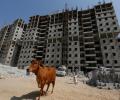
CREDAI-MCHI, a body of developers in Mumbai, has pegged the drop in sales booking at around 80 per cent in the February-March period this year. This is the second highest fall in residential sales in the past five years, after Q1, 2017, when the decline, due to the note ban, was 37 per cent.

According to sources, government officials have asked industry bodies and manufacturers to submit key concerns and requirements to begin manufacturing activity.

What will happen to the job placement and summer internship plans of India's management and IIT students? Many campuses are stepping in to help students hang on to their placements, in spite of the lockdown.

Even as most manufacturers are still assessing the overall impact on their businesses, early projections suggest the market may grow at its lowest ever rate, in 2020.

The usually busy Greater Noida expressway is empty except small groups of commuters that gather at its sidelines, seeking lift from every passing vehicle.

The analyst said since servicing of principal and interest on loans will beome challenging for mall operatos in the next couple of months.

Retailers and multiplex operators want mall owners to either forgo rent for the period of the shutdown or lower rent in the event the mall is open but footfalls are low.

In 2020 a round of hikes in customs duty on components like compressors, motors and printed circuit boards aggravated the situation, coronavirus crisis is now leaving manufacturers with no option but to hike prices despite fall in sales.

Employees asked to work from home... cancelled travel plans... curtailed meetings... Caution and precaution dominate Corporate India's response to Covid-19.

The delay of the SE 2, billed as the cheapest iPhone and tentatively priced below Rs 40,000 in India, puts the brakes on the tech major's plans for a revival. With the supply chain at its largest manufacturer Foxconn in disarray, as it is struggling to operate in China because of the COVID-19 crisis, the postponement was inevitable.

While 100 per cent FDI is allowed in single-brand retail, if the foreign investment exceeds 51 per cent, the 30 per cent mandatory local sourcing norm kicks in.

From the rollback of customs duty on key electronic components to fast tracking delivery of goods imported from China, players are looking for incentives on several counts.

While the outbreak has forced most leading brands like Apple, Xiaomi, Oppo, Vivo, and Realme to rework their launch dates and pricing strategies, Samsung, which struggled to maintain its hold over the market last year, has taken the lead.
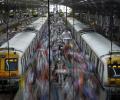
Launched by the ministry of housing and urban affairs, the ease of living index (EoLI) is aimed at providing a holistic view of the country's cities. These will be done on parameters like services provided by local bodies, effectiveness of the administration, outcomes generated through those services in terms of liveability and citizens' perception of the outcomes.

But it may come with a downside risk of further rise in prices of several products.

Experts feel that mall owners anticipate an increase in costs to the tune of 15-20 per cent annually, prompting a mixed response to the '24 hours' initiative. A mall owner said while the policy is good in spirit, implementing it would be a challenge as night shopping or eating out wasn't a habit in Mumbai yet.

Used since 1984 when late Rajiv Gandhi became the PM, the current residence was built over 12 acres of land, based on designs by New Delhi's chief architect Edwin Lutyens. However, with a new redevelopment blueprint on the table, the PM's residence is now expected to move to the South-West corner, behind South Block on Raisina Hill. Arnab Dutta reports.
 © 2026 Rediff.com - Advertise with us - Disclaimer - Privacy Policy - Sitemap - Feedback - About us - Terms of use - Grievances